
PFAS concentrates before it can be destroyed
Persistent molecules accumulate at interfaces — not in bulk water
PFAS does not remain uniformly distributed in water.
As surface-active molecules, it preferentially migrates to air–water interfaces, bubbles, foam and surface films.
Treating total water volume assumes uniform distribution. PFAS does not behave that way.
Most PFAS mass resides in a smaller, concentrated interfacial phase rather than in the bulk liquid.
Effective treatment therefore begins with controlled collection of this concentrated phase.
Only after concentration does destruction become technically and energetically feasible.
The objective is not dilution.
The objective is controlled phase separation.
PFAS avoids the water itself
It concentrates where treatment systems rarely look
PFAS does not remain uniformly distributed like typical dissolved contaminants.
Due to its amphiphilic structure, PFAS preferentially migrates toward phase boundaries — including air–water interfaces, surface films and solid–liquid contact zones.
Water treatment systems are traditionally designed for dissolved, volume-based contaminants. PFAS behaves as an interfacial contaminant.
This fundamentally changes how treatment must be designed. Systems built to treat bulk volume assume uniform distribution. PFAS instead accumulates at boundaries, where local concentrations can exceed bulk levels by orders of magnitude.
The problem is not contaminated water — but contaminated interfaces.

So treatment must target the interface
PFAS removal fails when systems treat bulk water alone.
Because PFAS preferentially concentrates at phase boundaries, effective treatment must first capture and isolate that interfacial phase.
Only after concentration does destruction become technically and energetically feasible.
Collection is not preparation.
It is the first technical step of treatment.
How PFAS is collected today
Across industries, PFAS is rarely destroyed directly.
It is first confined and concentrated.
Treatment systems apply concentration mechanisms to reduce volume and control dispersion. That is where collection begins.
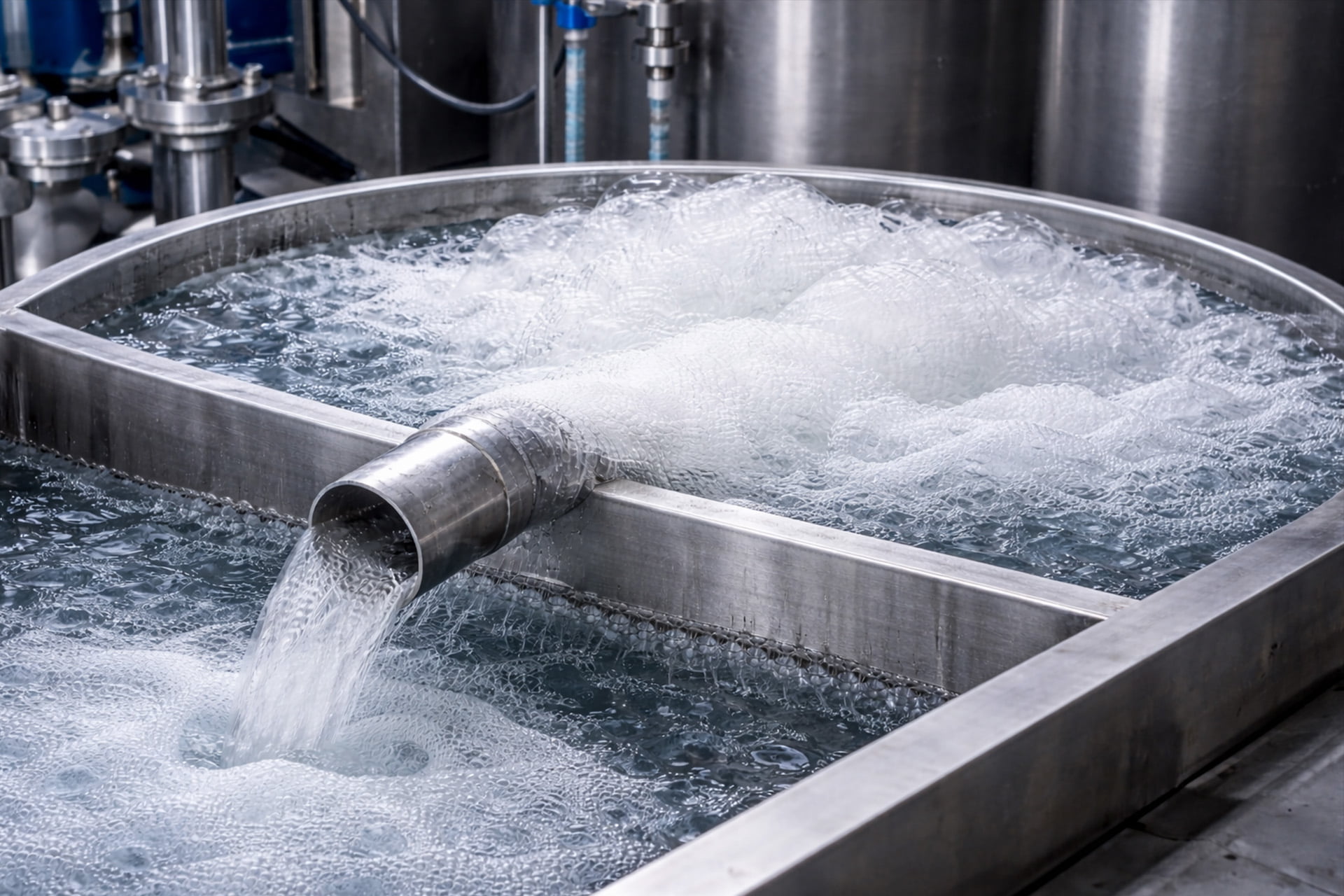
Foam Fractionation
Air bubbles are introduced into contaminated water.
Because PFAS molecules are surface-active, they preferentially adsorb to air–water interfaces.
Foam forms.
PFAS accumulates in the foam layer.
Result:
Reduced bulk liquid volume and a concentrated foam stream.
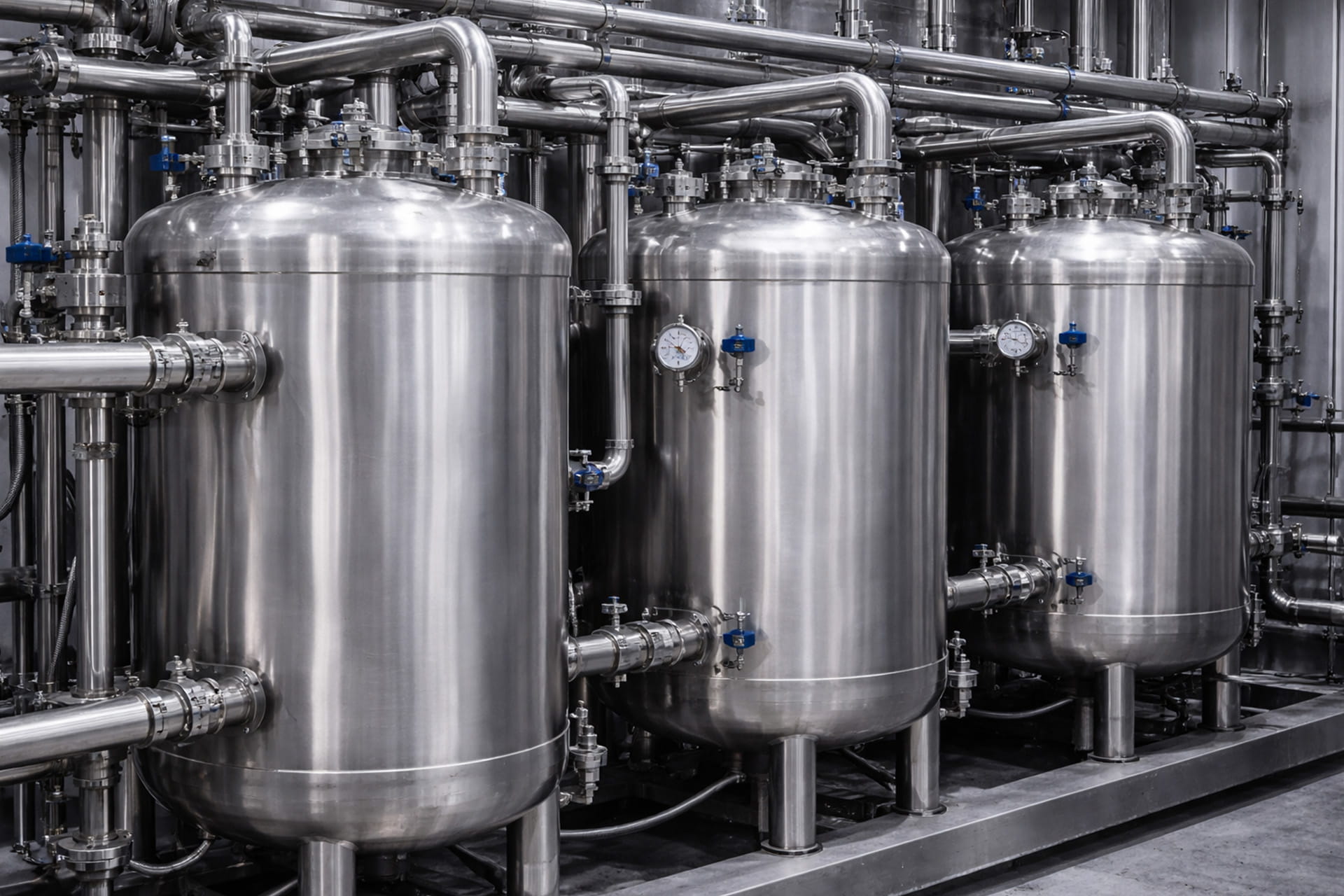
Granular Activated Carbon (GAC)
PFAS adsorbs onto carbon surfaces.
High surface area enables gradual accumulation of PFAS mass.
Over time, the carbon becomes saturated.
Result:
PFAS is transferred from water to solid media, requiring regeneration or disposal.
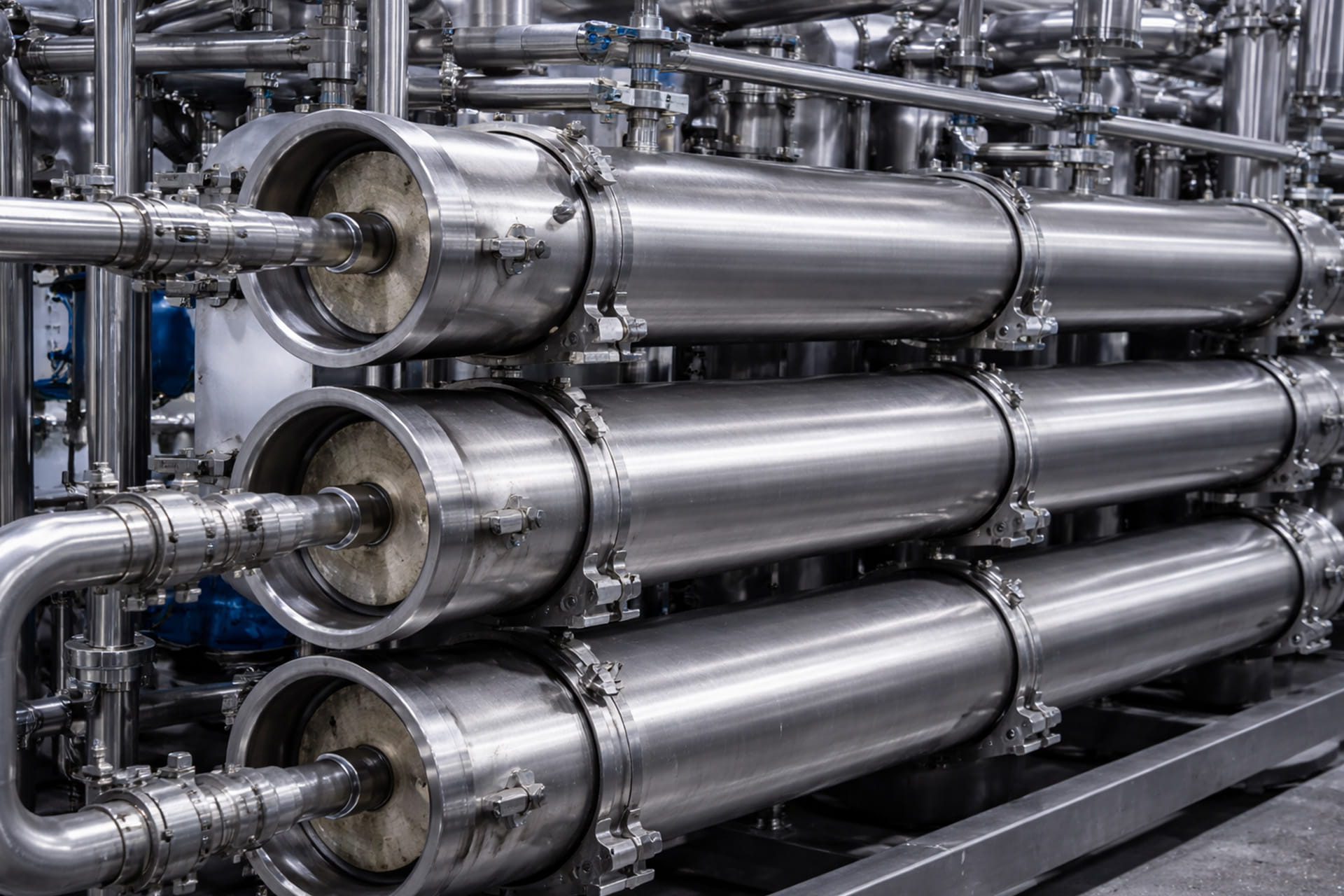
Membrane Filtration
Physical separation isolates PFAS into a reject (concentrate) stream.
Clean permeate exits.
Concentrated reject remains.
Result:
A high-strength PFAS concentrate requiring further treatment or destruction.
The Concentrate Stream
Every collection method produces the same outcome:
A smaller volume. A higher PFAS concentration.
The PFAS molecule remains chemically intact.
Concentration confines dispersion — it does not eliminate persistence.
Destruction is often externalized.
Transport, storage, or incineration relocate the material. Not the molecular bond.
The structural stability of PFAS remains the core challenge.
Once confined to a controlled concentrate stream, conditions for destruction can finally be established.
After concentration comes destruction.