
Plasma-based PFAS destruction beyond collection
Designed to address concentrated PFAS streams after collection
Persistent PFAS requires more than separation or relocation.
PFASDestructor applies safe, energy-efficient molecular destruction at the air-water interface within concentrated PFAS streams.
The process is implemented inline and on-site — following collection, where conventional concentration methods reach their limit.
Rather than transferring contamination, the objective is molecular bond breakdown under controlled conditions.
Engineered to address persistence at its source.
Why PFAS collection is not the endpoint
Moving beyond collection requires treatment under conditions where chemical stability no longer dominates system behavior.
PFASDestructor establishes controlled plasma activation combined with hydrodynamic vortex mixing, creating conditions in which persistent compounds can be progressively degraded following separation or concentration.
Designed for controlled energy demand
Plasma-based PFAS degradation is applied after separation or concentration — not on bulk water streams.
By targeting concentrated PFAS phases rather than diluted volumes, energy demand scales with PFAS mass load rather than total water throughput. This significantly reduces the energy required compared to approaches that attempt to treat large volumes of dilute contamination.
As a result, plasma-based degradation becomes a practical and scalable downstream step in PFAS treatment.

A credible endpoint for PFAS treatment
Most PFAS treatment strategies focus on managing exposure rather than addressing chemical persistence.
Persistent PFAS

PFAS remains chemically intact
Collection & Concentration
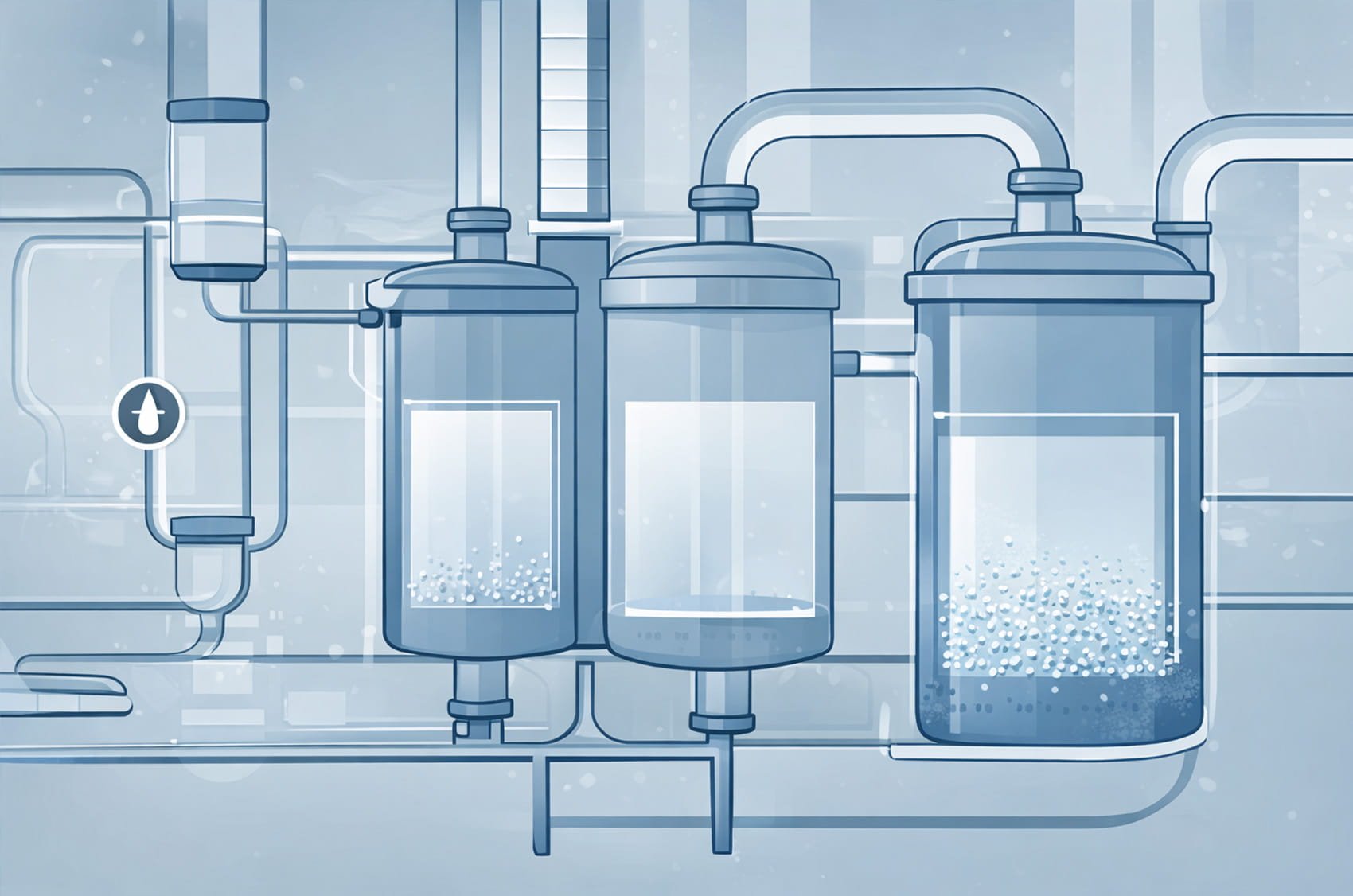
PFAS is separated, not chemically altered
Controlled breakdown

Chemical persistence is addressed
Conventional PFAS treatment
- Focus on separation and containment
- Long-term storage or off-site handling often required
- Responsibility transferred or deferred
- Ongoing monitoring and liability
PFASDestructor approach
- Degradation as a downstream treatment step
- Inline and on-site integration
- Minimizes transport and long-term storage
- Defined treatment endpoint
Collection manages PFAS.
Controlled destruction addresses persistence
Measured Destruction Performance
PFASDestructor is designed to enable controlled molecular degradation — not separation alone.
Rather than transferring PFAS into another waste stream, our hyperbolic vortex plasma reactor creates a controlled reaction zone where concentrated PFAS is exposed to high-energy bipolar plasma discharge.
Under controlled conditions, long-chain PFAS can be progressively shortened through carbon–fluorine bond cleavage. Continued treatment promotes further degradation, including breakdown of C4 compounds under optimized operating parameters.
Experimental testing has demonstrated degradation levels of up to 99% under defined laboratory conditions, measurable defluorination, and progressive reduction of persistent molecular structures.
The objective is not temporary removal — but measurable molecular breakdown.
How PFAS destruction actually works
PFAS accumulates at the air–water interface.
PFASDestructor applies a controlled plasma discharge directly to this interface using a high-velocity vortex flow.
Reactive species are generated where PFAS concentration is highest, promoting carbon–fluorine bond cleavage.
Destruction occurs at the interface — not in bulk water and not after transport.
The process targets PFAS at its preferred accumulation zone — the interface.
What physically happens
- PFAS accumulates at the gas–liquid interface
- Plasma generates short-lived reactive species at that location
- Carbon–fluorine bonds are progressively broken under controlled conditions
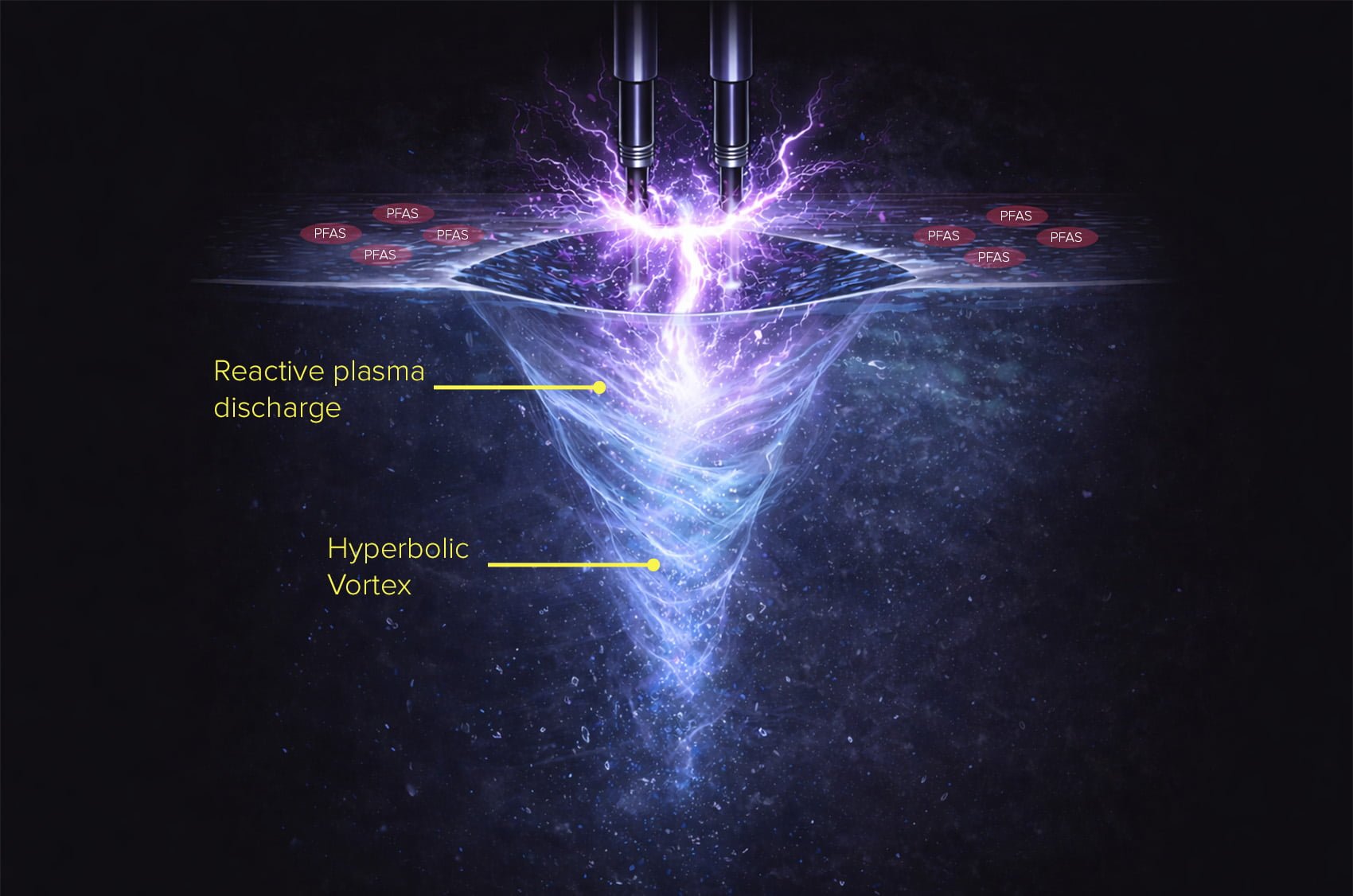
Because destruction occurs at the interface, energy is directed toward bond cleavage rather than bulk water treatment.
Integration into existing treatment trains
PFASDestructor is installed downstream of existing treatment steps such as filtration, adsorption, or concentration.
The unit treats the concentrated PFAS stream directly on-site, reducing dependency on transport or external destruction pathways.
In most applications, no major modification to upstream treatment equipment is required. The system operates as a downstream polishing and controlled destruction step.
PFAS destruction occurs in the concentrate stream — not in diluted bulk water.
Pretreatment
screening / filtration
Concentration
GAC / foam fractionation / RO
Destruction
PFASDestructor
Discharge
compliant effluent
From feasibility to implementation
Every PFAS stream differs in composition, load, and variability.
PFASDestructor is evaluated per site and per stream — not applied as a generic add-on.
We analyse:
- Concentration range
- Flow conditions
- Existing pretreatment
- Required discharge limits
This ensures realistic performance and energy assessment before installation.
The objective is not to promise removal — but to verify destruction performance.
Typical site requirements
- Containerized installation
- Installed downstream of existing treatment
- Minimal building modification in most applications
- Electrical connection as primary utility requirement
- On-site treatment of concentrated PFAS streams
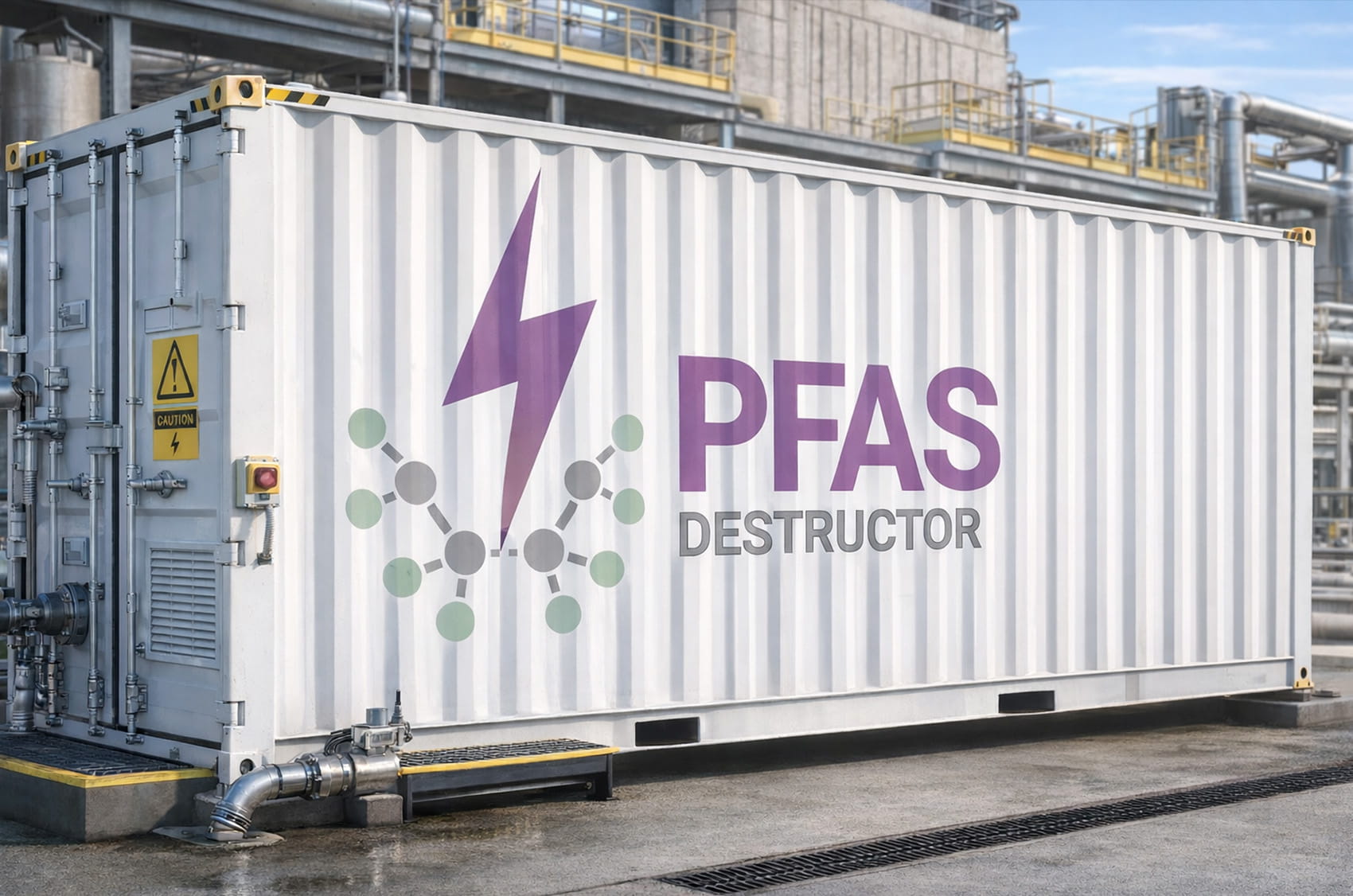
Example containerized PFASDestructor installation